





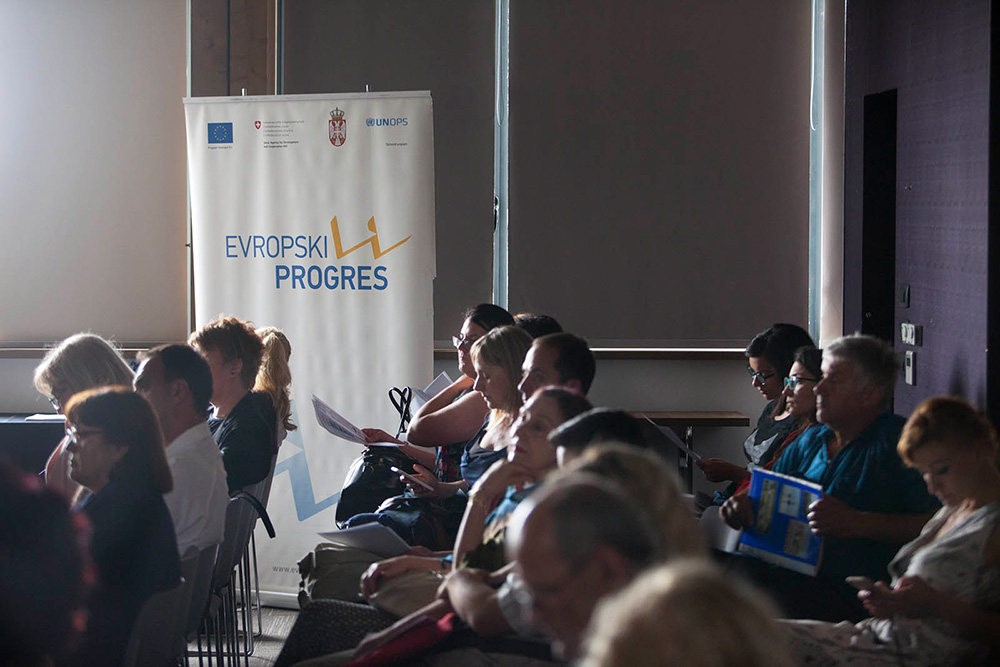

Gender equality policies and women’s participation in public life at the local level is a precondition for the development of any society. This is the conclusion of the conference “Women Together: Gender Equality in the Local Community” bringing together more than 100 councilwomen and councilmen from South East and South West Serbia, members of the national and provincial Women’s Parliamentary Network, and representatives of local governments and local gender equality mechanisms.
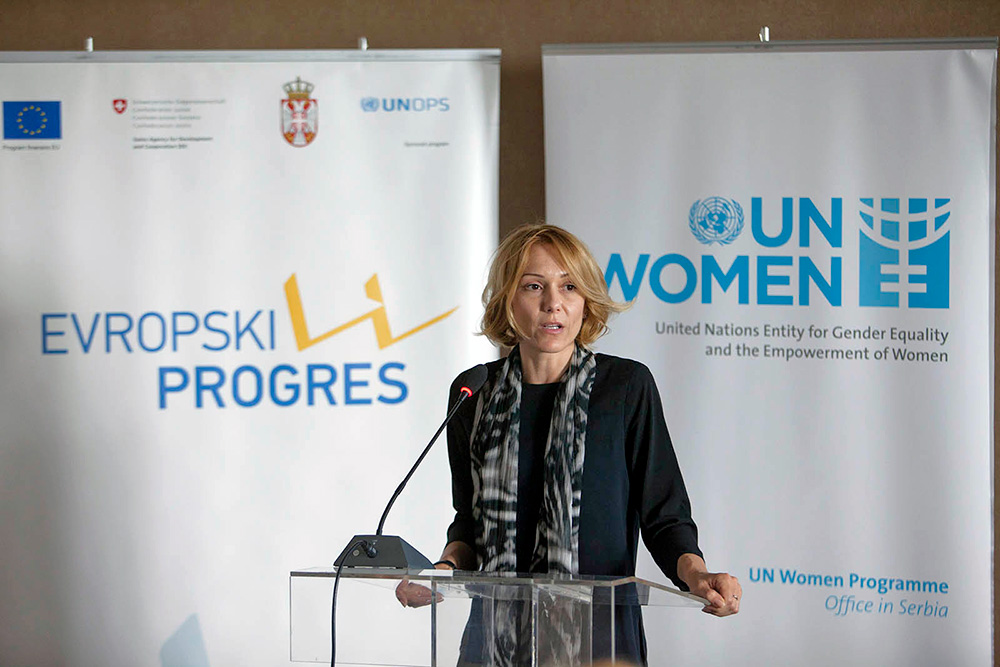
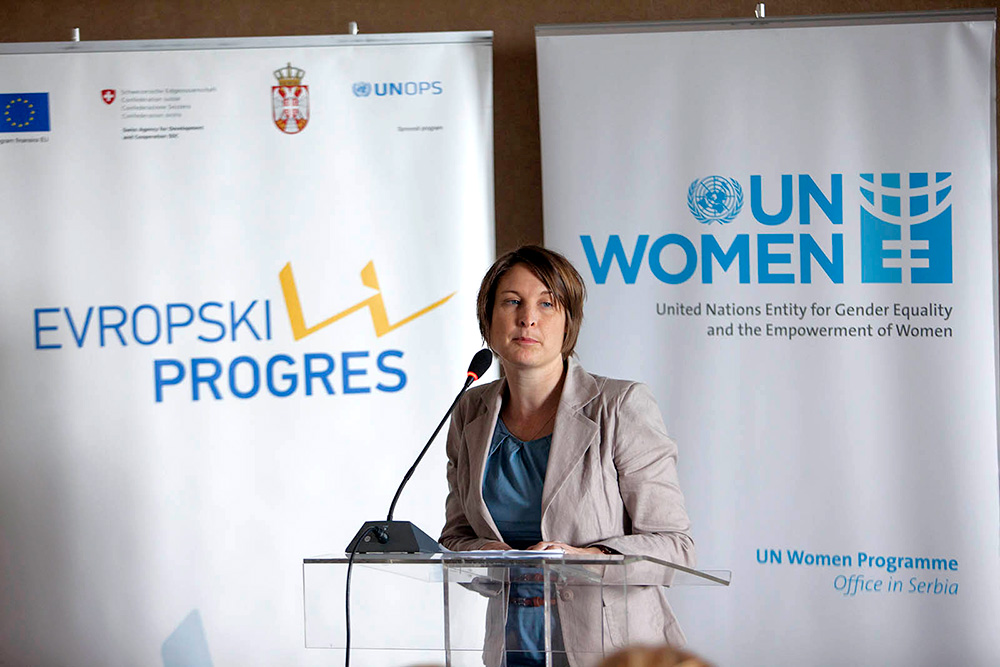
Branka Drašković, advisor to the Deputy Prime Minister of the Government of Serbia and Chairwoman of the Coordination Body for Gender Equality, opened the conference saying that every country whose goal is economic and social prosperity advocates the empowerment of women and their inclusion in the political, economic, and social life.
Stefana Miladinović, Member of Parliament, co-ordinator of the Women’s Parliamentary Network of Serbia, reminded the audience about the way women in legislative bodies organized in informal groups, comprising members of all political parties and movements, succeed at reaching a consensus regarding certain social issues despite differences – thus promoting a different political dialogue. “Today, guided by the idea of female solidarity and encouraged, we want to change the society, politics, and ourselves”, said Stefana Miladinović.
The establishment of the legal and institutional framework for improving gender equality has been supported for the last decade both by the European Union (EU) and the Government of Switzerland through European PROGRES and other development programmes preceding it and, as Priska Depnering, Deputy Director of the Swiss Cooperation Office said, significant progress and positive changes have been achieved. Namely, the share of councilwomen in local assemblies is between 20 and 25 percent; all 34 local self-governments included in the implementation of the European PROGRES have local gender equality mechanisms; 30 municipalities have adopted the European Charter for Equality of Women and Men in Local Life; and most have local action plans.
Emphasising the importance of today’s event, which demonstrates how, if well organised, women can significantly contribute to gender equality by working together, Deputy Director of the Swiss Cooperation Office said that the Swiss Government remained committed to supporting the improvement of gender equality, as it constitutes a step forward in creating a society that gives equal opportunities to all and is socially and economically prosperous.
“Gender equality is one of the European values and fundamental rights, therefore the European Union is supporting a large number of projects aimed at improving gender equality”, said Ana Milenić, the contact person for gender equality in the EU Delegation in Serbia, and announced that the EU will continue supporting the empowerment of women in local communities.
The European Union and the Government of Switzerland, through European PROGRES, have provided support for the economic empowerment of women, women’s entrepreneurship, enjoyment of human rights, and improvement of healthcare for women, and has also supported 18 projects in the municipalities in the south east and south west of Serbia[1] implemented by local gender equality mechanisms to improve the social and economic position of women.
“We did not just talk about gender equality, but also implemented it at all levels of society and government, NGOs, particularly those that promote the rights of Roma of both genders, and of women”, said Graeme Tyndall, European PROGRES Programme Manager, and added that gender equality and economic empowerment of vulnerable groups are the main elements of activity of the United Nations Office for Project Services (UNOPS), which implements this development programme.
UN Women, the United Nations Entity for Gender Equality and the Empowerment of Women in Serbia, has implemented a range of activities in strengthening the capacity of women councillors in 10 municipalities in Serbia also with the support of the European Union and the Government of Switzerland, through European PROGRES[2].
Milana Rikanović, head of the UN Women Office in Serbia, pointed out that our needs are not the same, and that the manner in which we plan usually has different impacts on male and female citizens, and not all will benefit the same from our policies and investments. “The effects of our work are best seen at the local level; therefore, it is important to support local gender equality policies”, said Rikanović.
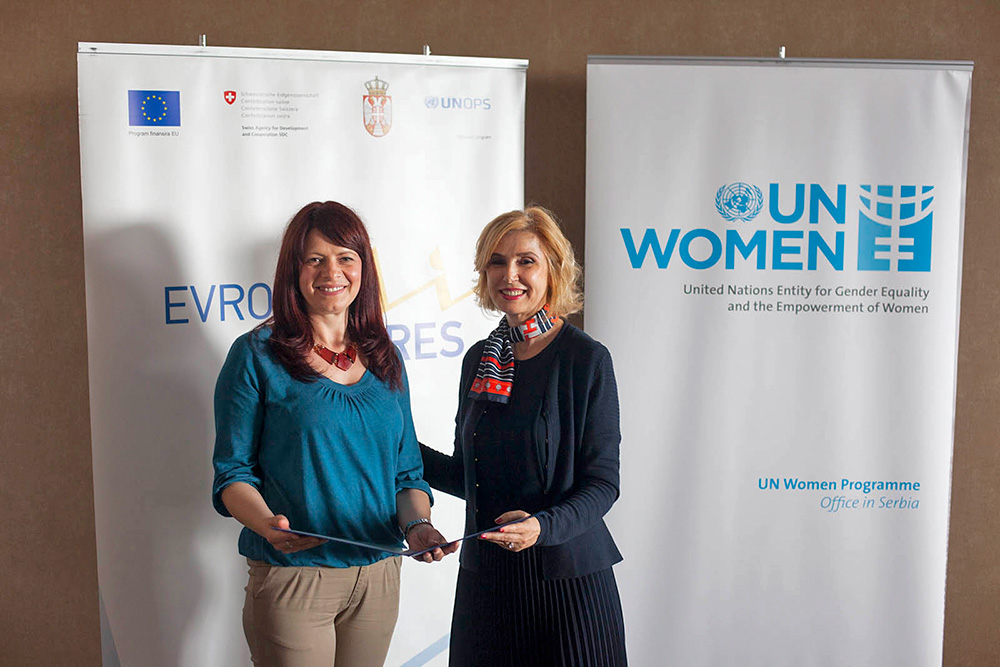
The members of the female councillor networks and local gender equality mechanisms were awarded plaques for the support to gender equality policies and improvement of women’s position at the local level.
[1] Support has been provided to the local gender equality mechanisms in Aleksinac, Babusnica, Bela Palanka, Blace, Bojnik, Bujanovac, Crna Trava, Ivanjica, Leskovac, Medvedja, Merosina, Priboj, Prokuplje, Raska, Surdulica, Svrljig, Tutin, and Vladicin Han.
[2] The municipalities in which the project has been implemented are: Aleksinac, Babusnica, Brus, Knjazevac, Medvedja, Merosina, Priboj, Prijepolje, Svrljig, and Surdulica.
