






The European PROGRES Steering Committee has today granted funding for the five projects for support to clusters in the total amount of 198,000 Eurosof which the European Union and the Government of Switzerland will provide 174,000 Euros and the remaining 24,000 Euros would be covered by clusters themselves. These projects will involve 28 small and medium enterprises in the South East and South West of the country. The creation of at least 15 new jobs is expected through the implementation of the activity, as well as the increased turnover and export by at least 5 percent.
Technical support for ten municipalities in preparation of capital investment plans and programme budgeting for 2016 was also approved at the meeting. Drafting the capital investment plans was part of the efforts to improve the process of identification, development and implementation of the projects that can greatly contribute to development. Pursuant to the Budget Law the local governments started implementing programme budgeting in 2015 but they still need expert support in order to fully apply this budget model that can contribute to more effective public finance management.
During the today’s fifth meeting, the Steering Committee also approved the criteria for public calls for introduction and development of geographic information systems (GIS), public-private partnerships and business start-up projects for women. Furthermore, the plan for supporting municipalities to improve the development of social inclusion through employment of vulnerable groups was also approved.
The progress achieved by the Programme in the first quarter of this year was also presented at the meeting. Perhaps the best progress indicator lies in the fact that 77 projects were approved for funding in the overall amount of 1.12 million Euros. Another key result accomplished during this period is the call for submission of proposals for the local infrastructure projects by the Department for Contracting and Financing of EU Funded Programmes of the Ministry of Finance of the Republic of Serbia. On the other hand, the Steering Committee members pointed to certain challenges the Programme is faced with.
Chairperson of the Steering Committee, Branko Budimir, from the European Integration Office of the Republic of Serbia indicated that a small number of submitted project proposals were directly related to economic development. Out of 53 received proposals for development of technical documentation, only six were economy-related while even 53 percent of proposals referred to the reconstruction of the already existing infrastructure. He invited the representatives of local self-governments to try to identify the projects that contribute to economic development in order to spend the funds available through European PROGRES as efficient as possible.
Ana Stanković, from the Delegation of the European Union, said that municipalities must comply with the initial dynamics in project implementation and that all delays at the beginning, including the delayed payments of co-funding amounts by the municipalities, may slow down the project implementation. In the future, the implementation of these projects will be an important recommendation for funding of new projects, added Stanković.
The representative of the Swiss Cooperation Office in Serbia, Petar Vasilev, added that there must be a certain degree of cooperation in project realization and that the “donors must be confident that a particular municipality is a good partner”.
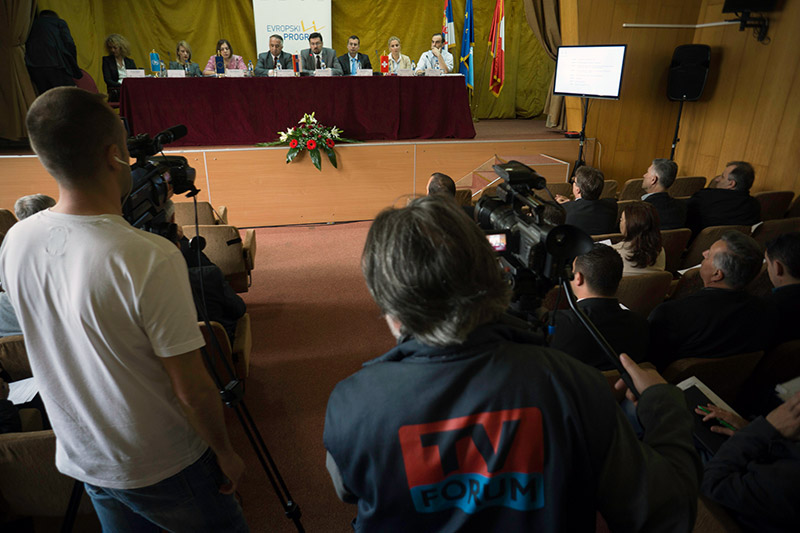
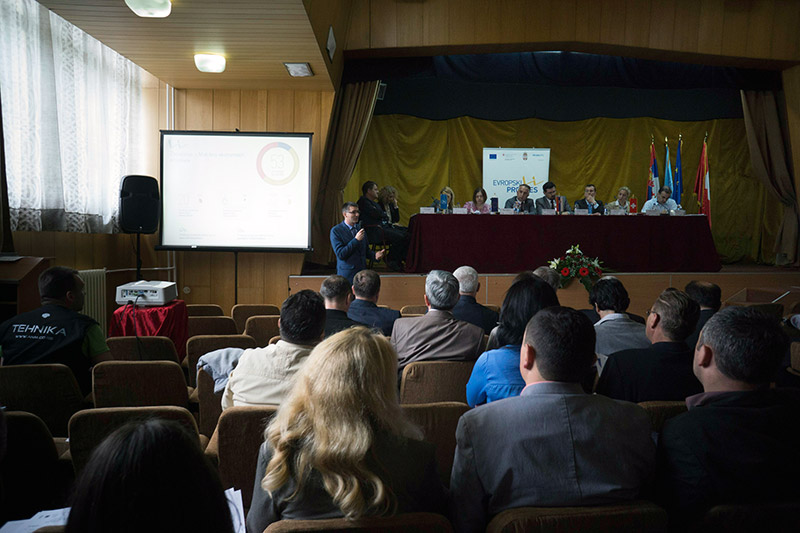
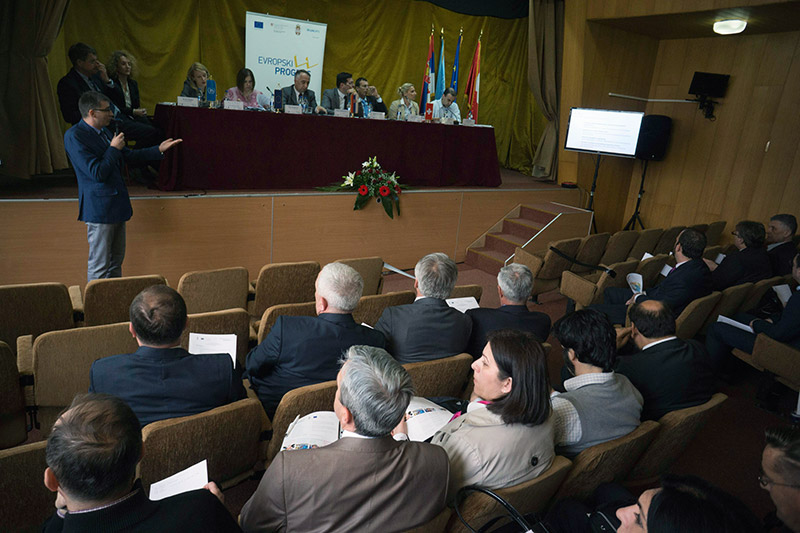
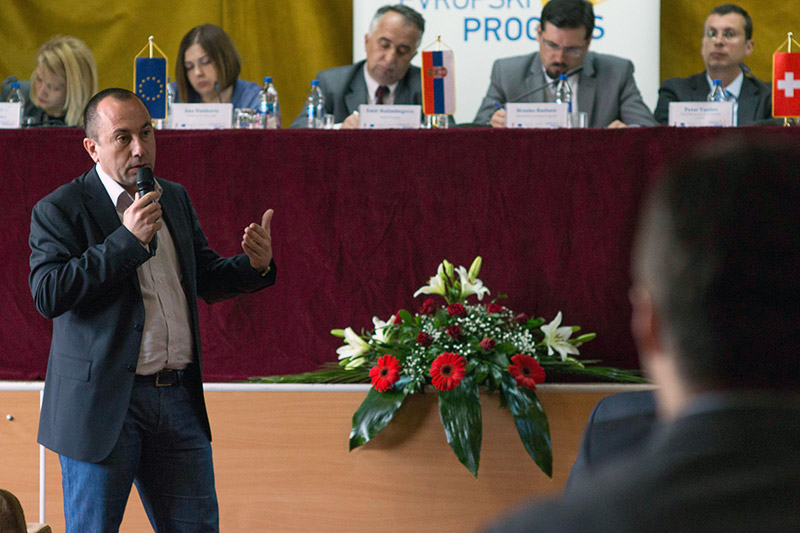
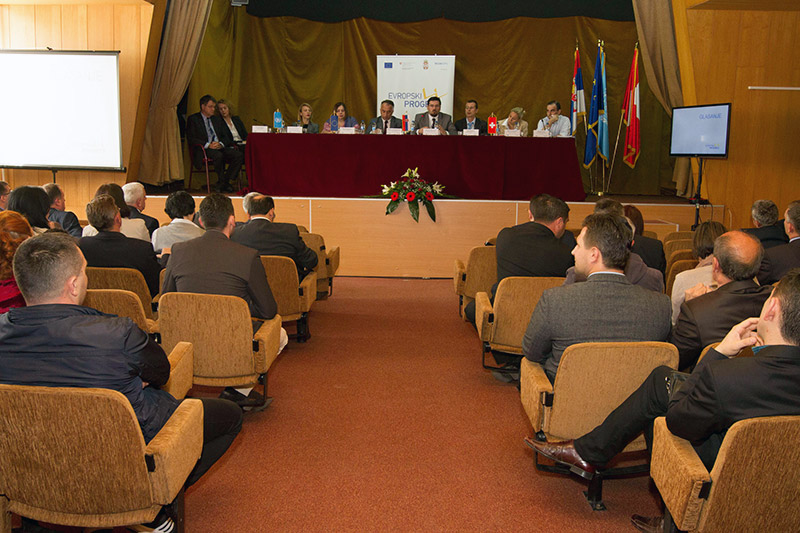
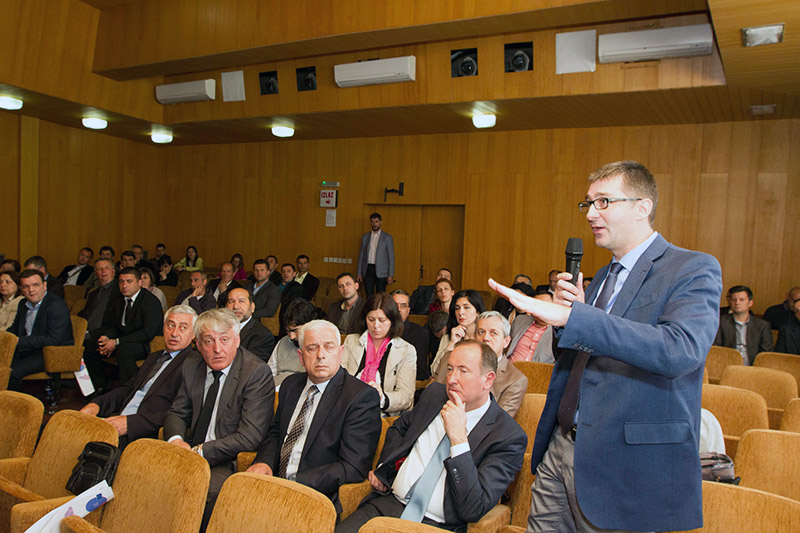
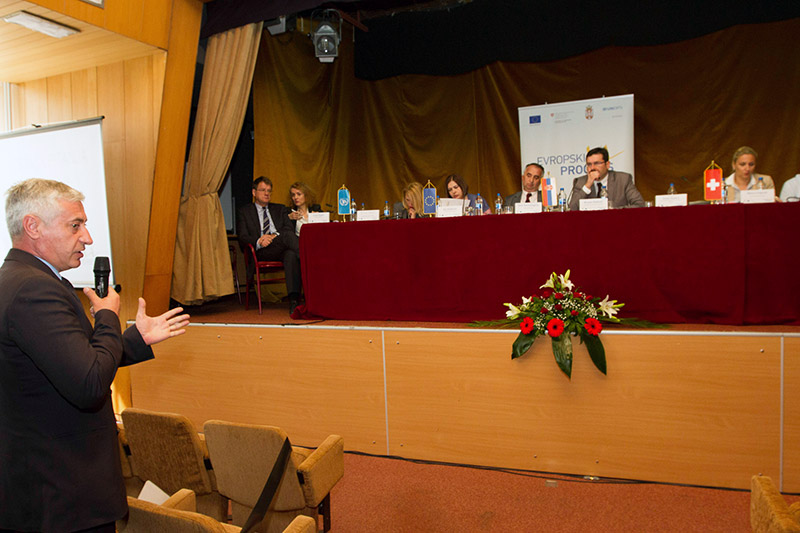
The meeting was presided over by the European Integration Office of the Government of the Republic of Serbia and it was attended by the representatives of the Serbian ministries, municipalities participating in the implementation of the European PROGRES, representatives of the development agencies and projects, civil society and donors – representatives of the European Union and the Government of Switzerland.
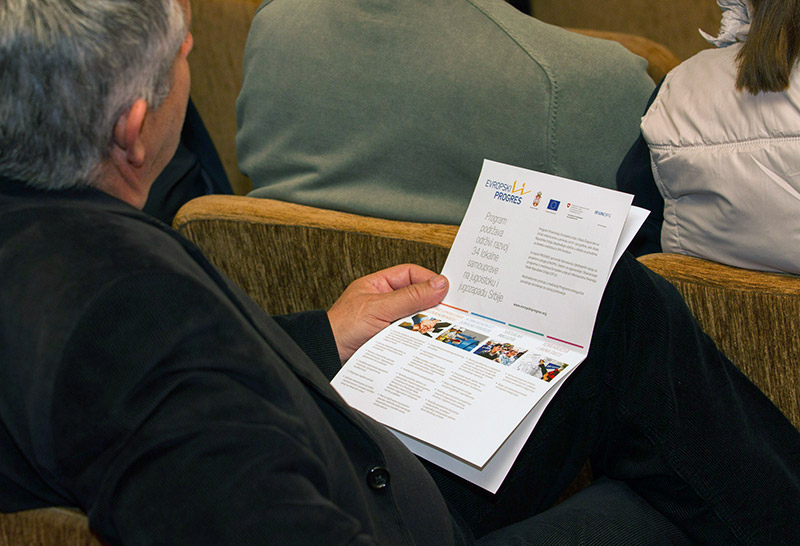
The activities of European PROGRES, the programme contributing to sustainable development of the South East and South West Serbia will be financed by the European Union and the Government of Switzerland in the amount of 24.46 million Euros. The approved projects will aim to strengthen the local administration, create enabling environment for the development of infrastructure and economy and enhance implementation of social inclusion and employment policy. The programme is implemented by the United Nations Office for Project Services (UNOPS) and the Department for Contracting and Financing of EU Funded Programmes (CFCU) of the Ministry of Finance of the Republic of Serbia.
The following municipalities are included in the Programme – Novi Pazar, Ivanjica, Nova Varoš, Priboj, Prijepolje, Raška, Sjenica and Tutin in the South West Serbia, as well as Prokuplje, Blace, Žitorađa, Kuršumlija, Leskovac, Bojnik, Vlasotince, Lebane, Medveđa, Crna Trava, Vranje, Bosilegrad, Bujanovac, Vladičin Han, Preševo, Surdulica, Trgovište, Brus, Aleksinac, Gadžin Han, Doljevac, Merošina, Svrljig, Babušnica, Bela Palanka and Knjaževac in the South East of the country.
