


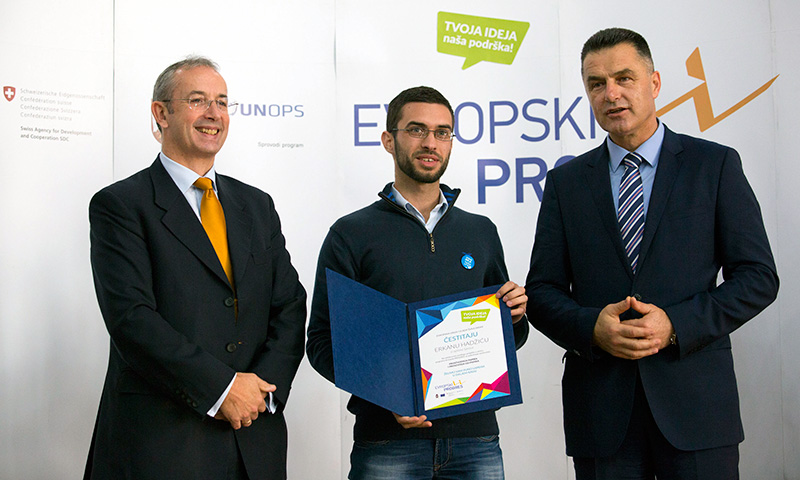
The internet portal Trading Economics,[1] which compares key economic indicators for 196 countries around the world, has ranked Serbia 39th with respect to unemployment. Despite the fact that we have left behind the most critical, transition period, when a decade ago unemployment peaked at the high 28.2 percent, the official data of the Serbian Statistical Office for 2016 shows that the average unemployment rate in Serbia is still alarming and close to as much as 14 percent on average.
The nature of unemployment in Serbia, where as much as two-fifths of the unemployed have been jobless for more than five years and a mere quarter for less than a year, implies that it is not a cyclical, but rather a structural phenomenon. In most of the cases, it affects young people, and as often as not results in economic migration of the population.[2]
By embarking upon processes of European integration, Serbia has put an increase in employment at the top of its national development priority agenda, and is committed to creating an appropriate economic environment through adequate economic and social policies and harmonisation of its legislation with international standards.
These measures should not only encourage foreign investment but also facilitate the popularisation of the European strongest economic trend – start-ups in the form of family, small and medium-sized enterprises.
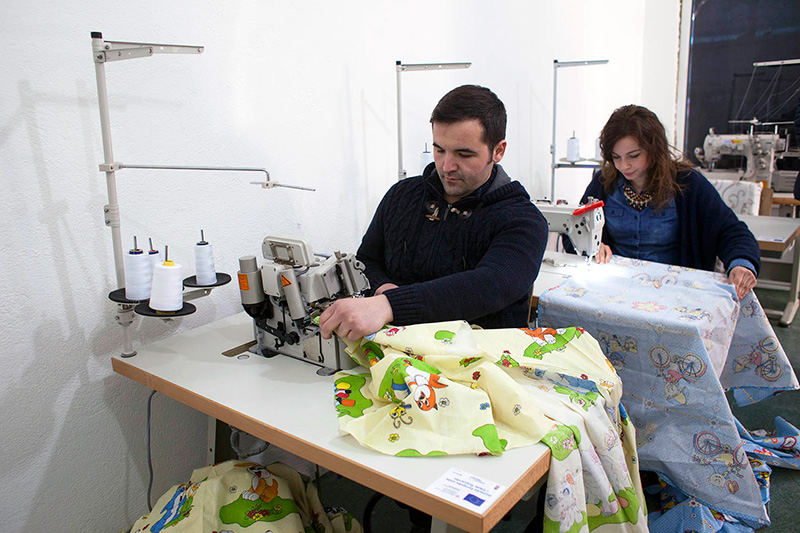
In accordance with the above, the European Union and the Government of Switzerland, through the European PROGRES development programme, support a range of activities that contribute to job creation, and thus to a better standard of living for citizens in 34 municipalities in the southeast and southwest of Serbia.
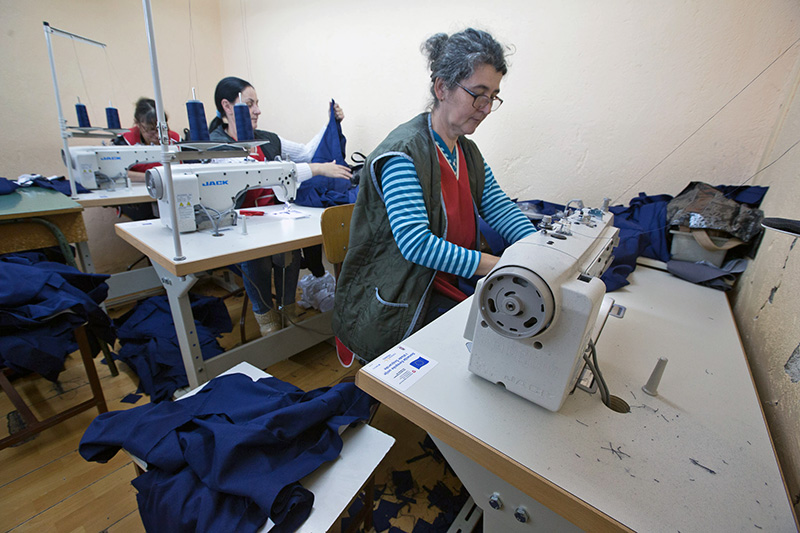
Improving knowledge and skills of people is one of the ways to increase employment. To this end, professional training programmes are implemented in ten municipalities: Aleksinac, Babušnica, Bela Palanka, Doljevac, Ivanjica, Prijepolje, Prokuplje, Sjenica, Trgovište and Vranje. Training and professional practice in local self-governments or with appropriate employers will be attended by 260 people, and at least 150 of them are expected to get jobs. In accordance with the National Employment Plan, this support is targeting primarily young people up to 30 years of age, people with lower levels of education, the Roma, persons above 50 years of age and the long-term unemployed.
In terms of the planned number of new jobs, the municipality of Doljevac is in the lead, where the plan is for a local employer to hire 100 young people following their successful completion of training courses. There they will get an opportunity to gain their first work experiences required for employment.
“Investment in education and training systems, as well as an assessment of the needs for skills in the labour market, fall among key factors for boosting employment, while at the same time, the projects that we support actively fight against poverty and social exclusion, and for greater gender equality,” said Graeme Tyndall, European PROGRES Programme Manager.
Judging by the experience of the euro area, where in 2016 the lowest unemployment rate was recorded since July 2009, the number of jobs can also be increased through the encouragement and promotion of self-employment.
In that manner, the donors of European PROGRES have helped 22 young people in the southeast and southwest of the country, with 183,307 Euros, to start their businesses, with the potential to hire their fellow citizens as well.
Ana Nedeljković, Manager of the Sector for Good Governance and Social Inclusion within European PROGRES, believes that support for making the first steps when starting one’s own business is crucial for the sustainability of the project, so future entrepreneurs supported by the Programme have received mentorship, as well as training in the areas of business management, marketing and planning.
The Programme has also supported economic empowerment of 45 new women entrepreneurs, who constitute the largest group among the vulnerable population in society, with 357,000 Euros. However, support for women's entrepreneurship has a much wider ranging impact, because the inclusion of the neglected half of society empowers communities and contributes to the development of local economies.
So now, Tanja Roljević has a shop in Nova Varoš for watch repairs and jewellery making. She has returned to her native town after several years spent in Belgrade, and with the support of donors revived the family tradition.
“The realisation of this long-planned project has given me the necessary confidence to move on. The more I learn on this job, the more I believe that all my ideas can be put into practice. I am currently helping women with entrepreneurial initiatives in my town to launch their own start-ups, and I am predicting their success as well,” says Tanja.
European PROGRES has also recognised the potential of social enterprises, which can be a source of innovative solutions for meeting social needs, but also for creating jobs.
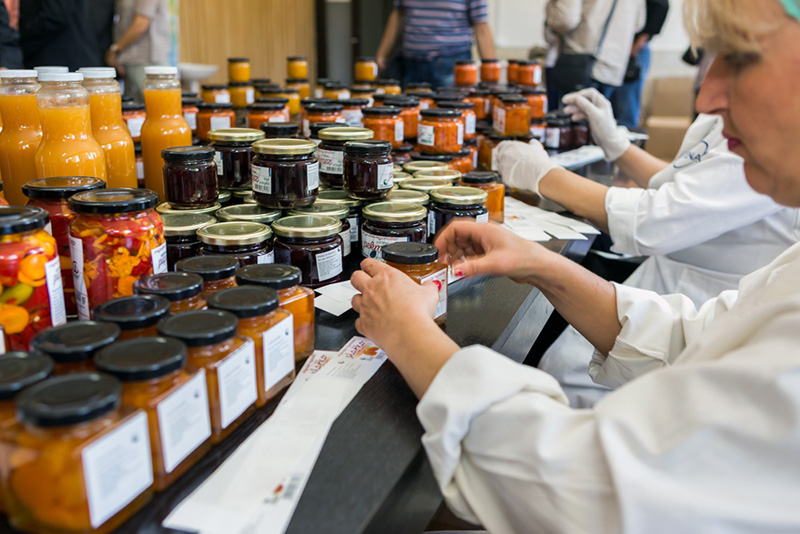
“Radanska ruža” from Lebane, the first social enterprise in the Jablanica District established with the support of the EU and the Government of Switzerland, has been successful – after a year in operation it has doubled the number of women employed. Now 13 women have steady jobs, while another twenty are occasionally engaged, and the company has itself become known for its local products – red pepper chutney, jam and other traditional dishes made of fruits and vegetables growing on the slopes of Mount Radan.
“The thing that is particularly important is that we have achieved the true goal of social entrepreneurship – and it is not only to make profit, but also to address important social issues, such as, in this case, unemployment among vulnerable groups,” says Biljana Kerić, Programme Associate for social inclusion.
Such companies offer employment opportunities for all those whose chances to get a job by competing on the market are slim, and these are, in most of the cases, persons with disabilities, women, persons above 50 years of age and members of the Roma community.
So far, more than 17 micro and small-sized enterprises have also been supported through European PROGRES, which will create 40 new jobs through production upgrades.
New jobs in micro and small-sized enterprises have been created for women and young people, and special attention has been paid to employing vulnerable and marginalized groups who are less employable.
Examples of good practice from the EU and the region have shown that a systematic approach to solving the problem of unemployment produces results. Therefore, the focus of the announced European Union support in the coming period will be on the sector of micro, small- and medium-sized enterprises, because they are the drivers of the economy in EU countries and generate more than 85 percent of jobs in the private sector.
Hence, in the period ahead, Serbia is on the right track to reverse decade-long unemployment trends at the national level. From the perspective of investors, available and educated workforce is Serbia’s comparative advantage, and with a wide range of actors who invest and support measures to boost employment, such as the European Union and the Government of Switzerland, there is a good incentive for the Serbian government to persevere in solving this priority problem.
