


Working together with our reliable partners – local self-governments and local communities, we are progressing, project by project, towards the accomplishment of our common goal: socio-economic development of 34 programme municipalities.
Standing out among the results achieved during the second year of programme implementation is the establishment of the taxpayer database in 16 municipalities, which increased their local budget revenue by 13 percent. In addition, the support to the development of 20 main designs created conditions for the construction of necessary infrastructure and attracting investments to municipalities.
The Programme also contributed to the improvement of social inclusion of vulnerable groups through 19 projects implemented in partnership between the civil society and municipalities which, among other things, enabled 31 women to get permanent jobs, while 23 persons with disabilities were temporarily employed.
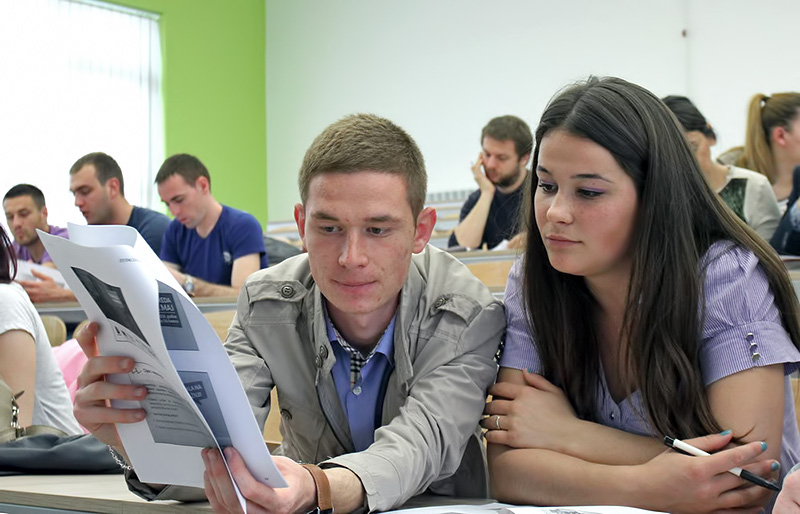
The most important single project, implemented during the second year of the Programme, was the completion of the construction and equipment of the higher education building intended for the operation of the bilingual Bujanovac Department of the Subotica Faculty of Economics, attended now by almost 400 Serbian and Albanian students.
At the second Programme Steering Committee meeting held in Vranje on 10 August 2016, it was decided that the European Union and the Government of Switzerland would, through European PROGRES, allocate 2.6 million Euros for new activities, including 14 local infrastructure projects worth 1.5 million Euros.
The Programme will continue the good practice of supporting the promotion and development of entrepreneurship. Namely, during the previous year, through the 357,000 Euros support to women’s entrepreneurship, 45 women established their own enterprises, and now the Steering Committee has approved 253,880 Euros support to 17 micro and small enterprises, as well as to 22 young people who will, through European PROGRES, obtain equipment worth 183,307 Euros to start their own businesses.
With this type of support European PROGRES contributes to greater competitiveness of the local economy, creation of jobs, and encouragement of the entrepreneurial spirit.
The Programme is also expanding its partnerships, so the Steering Committee members agreed to a project proposal supporting local self-governments to apply the electronic system of issuing building permits worth 71,000 Euros, which will be implemented in cooperation with the National Alliance for Local Economic Development (NALED). In addition, the public call criteria were approved for the implementation of the professional training programme in local self-governments, as well as the support worth 300,000 Euros for the implementation of the project “Golija – Transition from Planning to Development,” aimed at laying the foundations for the sustainable development of tourism and economic activity in Ivanjica, Sjenica, Raška, and Novi Pazar. The purpose of all these three initiatives is greater competitiveness of programme municipalities.
European PROGRES continues to implement the policy of inclusion, so we believe that the 24 new projects supported through the second Call for Proposals of the Citizen Involvement Fund will produce even more striking results and influence the local self-governments so that they are more sensitive to the needs of their communities. Additionally, the Programme will also provide 150,000 Euros support for the proposed activities for the implementation of the measures from the Strategy for Social Inclusion of Roma at the local level and thus support the most vulnerable communities in their initial step towards realising their civil rights.
Naturally, year two was not without its challenges, which we are resolving and leaving behind. We are entering the last year of implementation with over 300 projects, and for the successful completion of all activities we are, as always, relying on your active participation and joint aspiration to be better every year!
