


Risks of fatal fires are much greater in informal settlements built in contravention of procedures, where the two chief causes of fire – improper use of open flames and faulty electrical installations – are a rule rather than an exception. On top of these problems, access to electricity, as well as water, is limited in these settlements, wherefore reactions to fires are constrained and weak.
Roma settlements, in which many residents collect and temporarily store recyclables near their living quarters, are in bigger danger of fires breaking out. Such practices turn each house into a fire hazard because great quantities of flammable material in a small, densely populated area frequently result in the outbreak and rapid expansion of fires. Statistics show that as many as twelve Roma children perished in flames from December 2013 to January 2015.
With a view to breaking this vicious and dangerous circle, the Niš-based organisation YUROM Centre launched a pilot project “Look after Yourself – Arak Tut” in 22 Roma settlements in ten South Serbian municipalities in the European PROGRES Area of Responsibility. The project activities focus on fire prevention and adequate community reactions to fires.
YUROM Chairman Osman Balić sees a solution to this lethal problem in awareness-raising, education and the activities of two currently unconnected stakeholders. “The primary goal of this project is to awaken the professional responsibility of urban planners, the emergency situations sector and the local administration – all three levels of government responsible for the security of the citizens. On the other hand, it aims at providing basic firefighting and prevention training to the residents of the Roma settlements”.
The project activities were launched in December 2015 by a round table on fire protection in Roma settlements, rallying experts, representatives of the Serbian Ministry of Internal Affairs, local self-governments, non-government organisations and interested citizens. The set of practical recommendations formulated during the discussion were communicated to the competent authorities by YUROM on behalf of the participants.
A number of activities, recounting the proper steps to prevent and quench fires in an easy-to-understand manner, have been organised in the meantime. Educational films promoting preventive fire protection and relevant publications on the topic have been prepared for the Roma settlement residents of all ages and literacy levels.
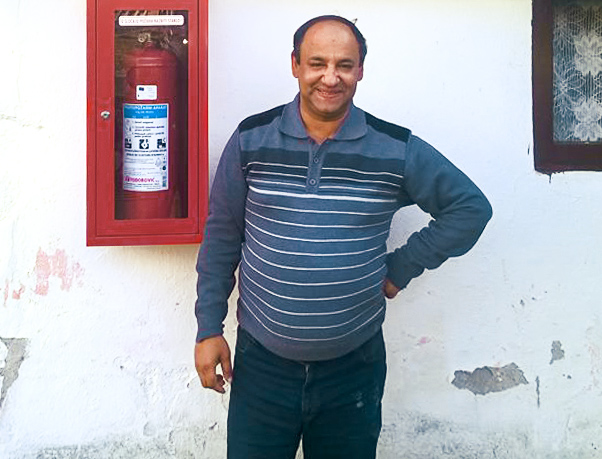
The final and perhaps, the most important activities involved the installation of fire extinguishers in the 22 settlements and the training of local firemen-volunteers, who will make up the future volunteer fire brigades.
Setting up a model for addressing the symptoms of deeply rooted negative social patterns of discrimination and marginalisation in Serbia is, perhaps, the greatest value of this eight-month project worth 21,450 EUR, which was funded by the European Union and the Swiss Government. That model is somewhat simple and implies: acceptance that a problem exists; joint efforts by the relevant institutions and affected citizens; identification of a solution addressing community needs; and active and united action to address the problem. This is a proven principle for countering negative statistics and, in the long run, achieving radical social change.
