


"European PROGRES, with the support of the European Union and the Swiss Government, is helping local self-governments to improve competitiveness and this initiative is actually a good example of efforts invested by the municipalities to tap into their wood potential as a competitive advantage", said Graeme Tyndall, European PROGRES Programme Manager. Tyndall added that cooperation between the public and private sectors strengthened the local economy and offered opportunities for the creation of jobs, which is of special importance considering that only one-fifth of people from underdeveloped municipalities, where about 46% of the total forest resources of the country are located, work in the wood processing sector.
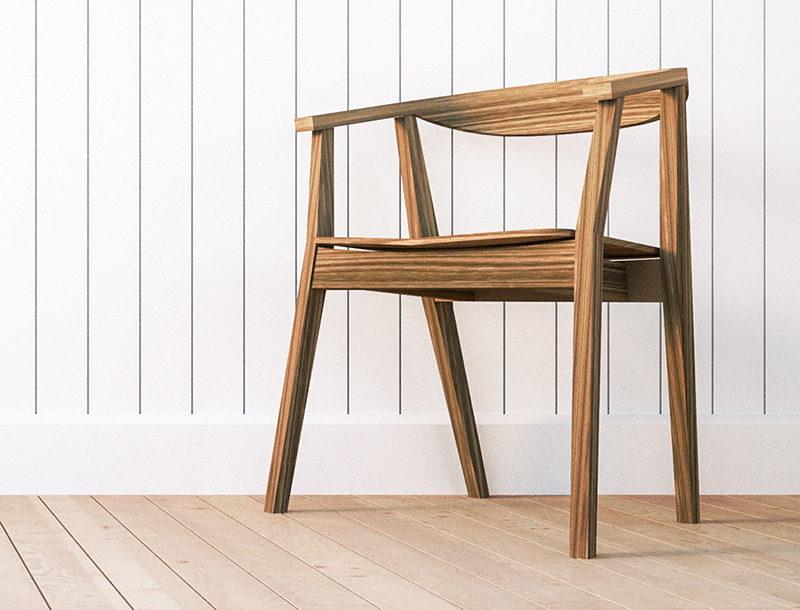
During the event the representatives of the local self-governments received the Letter of Intent, also signed by the partners of the event – the Development Agency of Serbia (RAS) and the Serbian Chamber of Commerce. This was the first step in the development of an Action Plan for the positioning of Serbia as an exporter of furniture made of solid wood which would provide a range of support measures for the sector, including the introduction of financial and non-financial incentives as support to solid wood furniture producers, adaptation of curricula in secondary vocational schools, as well as strengthening of cooperation between government agencies, local self-government units, forest management organisations, manufacturers of solid wood furniture and other participants, in the creation of the value chain.
The Director of USAID’s Office of Democratic and Economic Growth, Laura Pavlović, added that all relevant stakeholders from the public and private sectors at the local and national levels were included in the pursuance of this activity.
Ješa Erčić, Head of the Division for Industry and Agriculture at the Serbian Chamber of Commerce, stressed the potential of this initiative by highlighting that in addition to agriculture, the wood processing industry is the second most important sector in the country, earning a trade surplus worth 180 million Dollars, with an upward trend.
Professor at the Faculty of Forestry of Belgrade University Prof. Dr Branko Glavonjić pointed out that Serbia, which has 1.4 million cubic hectares of lumber, would obtain more competitive products with a high value added by making a shift to the higher level of processing. "If Serbia exported the final product instead of lumber, 5,300 new jobs could be created," said Glavonjić.
*Local self-governments signatories of the Letter of Intent: Arilje, Bajina Bašta, Bela Palanka, Boljevac, Bor, Brus, Čačak, Čajetina, Ćićevac, Crna Trava, Despotovac, Dimitrovgrad, Gadžin Han, Ivanjica, Knjaževac, Kosjerić, Kraljevo, Krupanj, Kruševac, Kučevo, Kuršumlija, Leskovac, Ljubovija, Loznica, Majdanpek, Mali Zvornik, Niš, Nova Varoš, Novi Pazar, Pirot, Priboj, Prijepolje, Raška, Ražanj, Sjenica, Surdulica, Svrljig, Trgovište, Trstenik, Tutin, Užice, Vladičin Han, Vranje, Vrnjačka Banja, Žagubica, Zaječar.
